 Wildlife
of Bolivia
Giant Armadillo
Other Mammals
Photo: Terrasos · CC BY-SA 4.0
Priodontes maximus
Basic stats
Diet
Mainly termites and ants; also worms, spiders, other invertebrates, small vertebrates and carrion
Habitat
Cerrado grassland, savanna and lowland forest
Range
South America east of the Andes from Venezuela to northern Argentina, including lowland Bolivia
Litter size
Probably 1
Gestation period
About 5 months
Size
75–100cm, tail another 50cm
Weight
Usually 18.7–32.5kg; up to 54kg in the wild
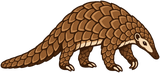
The giant armadillo is the largest living armadillo. Its shell is dark brown with 11–13 movable bands over the body and a pale yellowish band along the lower sides; the head is pale and the tail is covered in small rounded scales. The front feet carry enormous claws, the sickle-shaped middle claw reaching about 22cm, proportionally the largest claws of any living mammal. It has 80–100 small peg-like teeth, more than any other land mammal. Unlike some armadillos it cannot roll into a ball, and instead digs to escape (Wikipedia, general species account).
Giant armadillos are solitary and nocturnal, spending the day in large burrows with entrances averaging about 43cm across. They tear open termite mounds with their claws and can empty a whole mound. Their burrows are used by many other animals, so the species is considered a habitat engineer. Home ranges vary from about 450 to 1,500 hectares, and population densities are very low: about 5.8–6.3 animals per 100 square kilometres have been estimated in Bolivia. Females are thought to give birth only about once every three years (Handbook of the Mammals of the World; Wikipedia, general species account).
In Bolivia it is called pejiche or pejichi (Mammalian Species account). It is hunted for meat across its range and captured for illegal trade, and it is naturally rare and patchy, with a decline of 30–50% estimated over the past three decades (Wikipedia, general species account). On this guide it is a target species of Noel Kempff Mercado, the Chiquitanía and Kaa-Iya del Gran Chaco National Park.
Quick answers
- What does the Giant Armadillo eat?
- Mainly termites and ants; also worms, spiders, other invertebrates, small vertebrates and carrion
- What habitat does the Giant Armadillo live in?
- Cerrado grassland, savanna and lowland forest
- Where is the Giant Armadillo found?
- South America east of the Andes from Venezuela to northern Argentina, including lowland Bolivia
- What is the litter size of the Giant Armadillo?
- Probably 1
- How long is the gestation period of the Giant Armadillo?
- About 5 months
- How big is the Giant Armadillo?
- 75–100cm, tail another 50cm
- How much does the Giant Armadillo weigh?
- Usually 18.7–32.5kg; up to 54kg in the wild