 Wildlife
of Bolivia
Pampas Fox
Bears, Dogs & Otters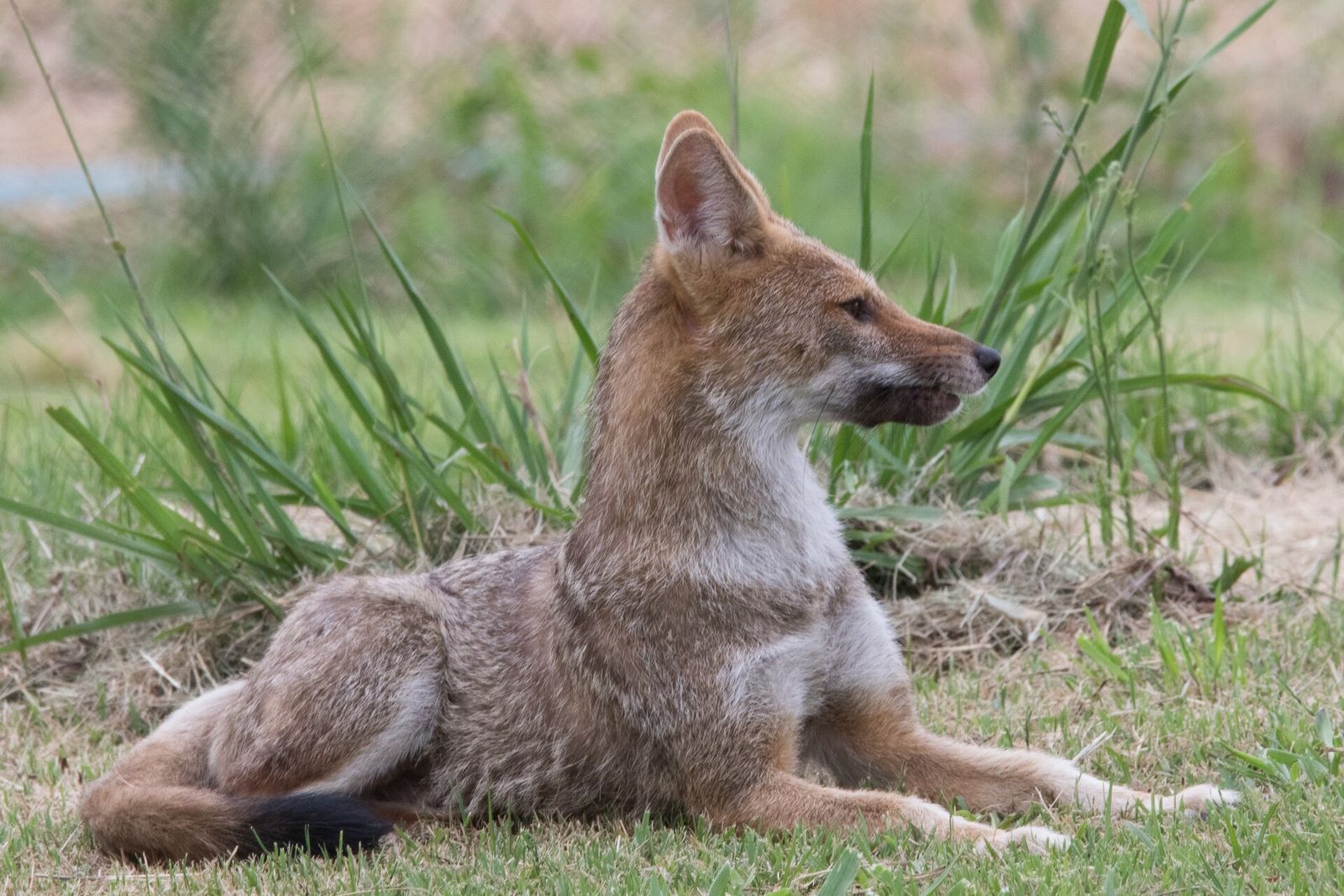
Photo: Frank Thomas Sautter · CC0
Lycalopex gymnocerca
Basic stats
Diet
Very omnivorous: birds, rodents, hares, fruit, carrion and insects, plus lizards, armadillos, snails, lambs and the eggs of ground-nesting birds
Habitat
Mainly open pampas grassland, often near farmland; also montane and Chaco forest, dry scrub and wetland; mostly below 1,000m but up to 3,500m in puna grassland
Range
Northern and central Argentina, Uruguay, eastern Bolivia, Paraguay and southern Brazil
Litter size
Up to 8
Gestation period
55–60 days
Size
Head and body 51–80cm
Weight
2.4–8kg; males about 10% heavier than females
The Pampas fox, also called Azara's fox or the grey pampean fox, is a South American 'false fox' (zorro) rather than a true fox. It looks like a smaller culpeo but has a proportionately wider snout, a reddish head and neck and a black mark on the muzzle. The short, dense coat is grey over most of the body, with a black line running down the back onto the tail and almost white underparts. The large triangular ears are reddish on the outside, and each lower hind leg carries a distinctive black spot. Animals in the north of the range are more richly coloured (Wikipedia, general species account).
It lives alone for most of the year, but pairs come together in the breeding season to raise their young, and the male brings food to the female at the den. It is mainly nocturnal but can be active by day, dens in caves, hollow trees or old viscacha and armadillo burrows, and marks its territory with latrine sites. Home ranges are about 260 hectares. Pups are born between September and December, are weaned at about two months and start hunting with their parents at about three months. Pumas and dogs are its main predators, and people hunt it for fur and to protect livestock (Wikipedia, general species account).
Eastern Bolivia lies within the Pampas fox's range, at the northwestern edge of the open grasslands and Chaco where the species lives (Wikipedia, general species account; Handbook of the Mammals of the World).
Quick answers
- What does the Pampas Fox eat?
- Very omnivorous: birds, rodents, hares, fruit, carrion and insects, plus lizards, armadillos, snails, lambs and the eggs of ground-nesting birds
- What habitat does the Pampas Fox live in?
- Mainly open pampas grassland, often near farmland; also montane and Chaco forest, dry scrub and wetland; mostly below 1,000m but up to 3,500m in puna grassland
- Where is the Pampas Fox found?
- Northern and central Argentina, Uruguay, eastern Bolivia, Paraguay and southern Brazil
- What is the litter size of the Pampas Fox?
- Up to 8
- How long is the gestation period of the Pampas Fox?
- 55–60 days
- How big is the Pampas Fox?
- Head and body 51–80cm
- How much does the Pampas Fox weigh?
- 2.4–8kg; males about 10% heavier than females