 Wildlife
of Bolivia
Ocelot
Cats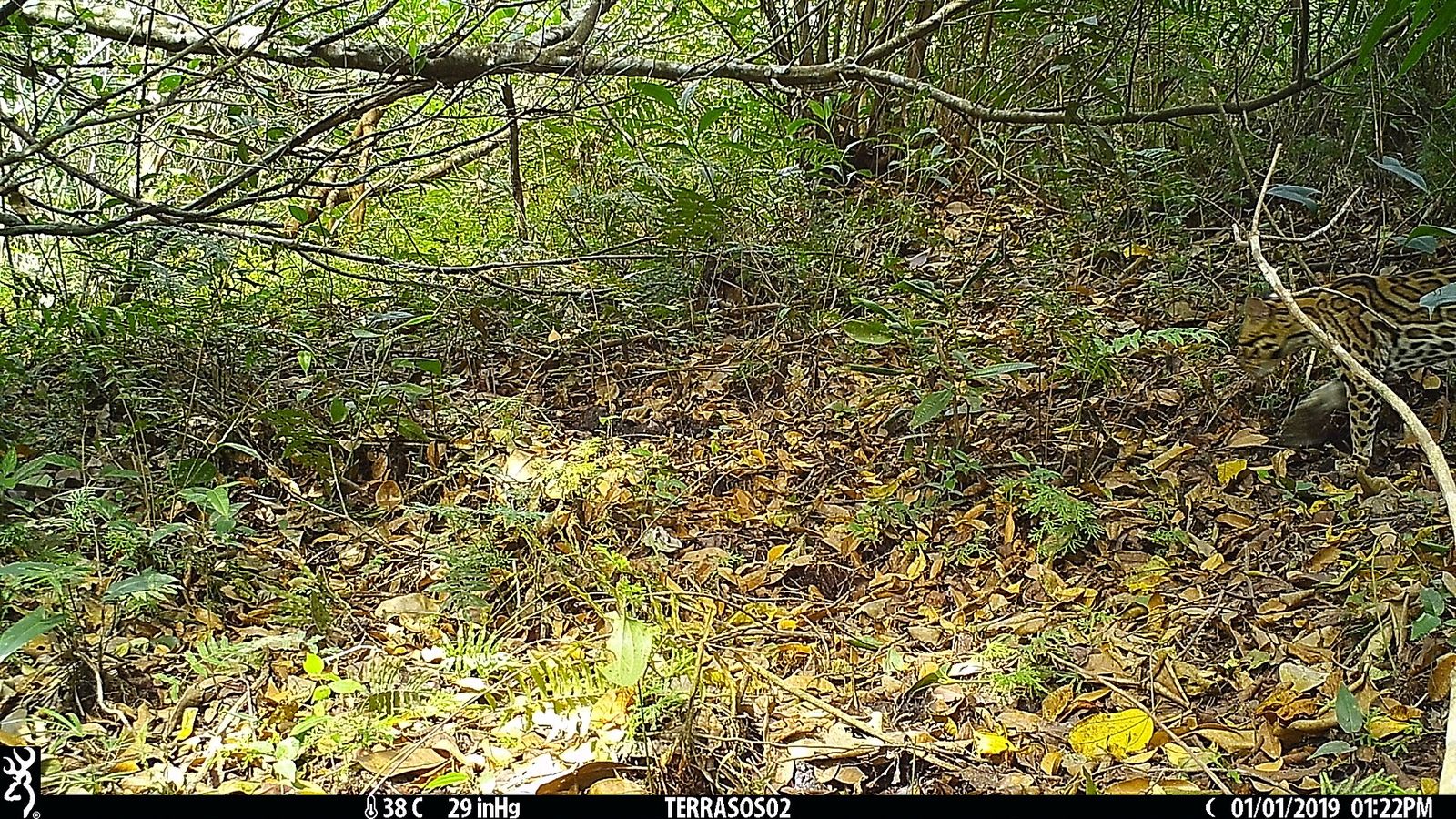
Photo: Terrasos · CC BY-SA 4.0
Leopardus pardalis
Basic stats
Diet
Mainly small mammals such as armadillos, opossums and lagomorphs; birds, reptiles and some fish are also taken
Habitat
Tropical forest, thorn forest, mangrove swamp and savanna, favouring dense cover close to water
Range
South-western USA (Texas and Arizona) through Mexico, Central America and South America to northern Argentina, and Trinidad
Litter size
1–3, most often one; averaging about 1.7
Gestation period
79–82 days
Size
Head and body 55–100cm; tail 30–45cm; shoulder height 40–50cm
Weight
Females 7–12kg, males 8–18kg
The ocelot's fur is extensively marked with solid black markings on a creamy, tawny, yellowish, reddish-grey or grey background. The spots on the head and limbs are small, while the markings on the back, cheeks and flanks are open or closed bands and stripes. Its neck and underparts are white, and its round ears have a bright white spot. Each ocelot has a unique colour pattern. The margay and oncilla look similar, but the ocelot is noticeably larger and heavier with a shorter tail, and the oncilla has dark spots on its underbelly (Wikipedia, general species account). The jaguar is much larger and heavier, with rosettes rather than spots and stripes (Wikipedia, general species account).
Ocelots are efficient climbers, leapers and swimmers that favour areas near water with dense cover and plenty of prey (Wikipedia, general species account). They are usually solitary and territorial, active from twilight through the night, and walk slowly on their rounds at about 0.3–1.4km/h (Handbook of the Mammals of the World). The males' larger ranges usually overlap those of two or three females. Young weigh about 250g at birth, begin following their mother at about three months, and disperse at two to three years old. Captive ocelots have lived about 20 years, though life in the wild is likely about half that (Handbook of the Mammals of the World).
Bolivia is one of the countries where the ocelot occurs, and hunting it is banned there (Wikipedia, general species account). A specimen from Buena Vista, Ichilo, in Bolivia was the basis for the subspecies steinbachi, named in 1941, and GBIF lists that subspecies in the Bolivian highlands (Handbook of the Mammals of the World). Across its range the ocelot depends heavily on dense ground or forest cover, and it rests by day in brush piles, clumps of vines, among tree roots and under fallen trees (Handbook of the Mammals of the World).
Quick answers
- What does the Ocelot eat?
- Mainly small mammals such as armadillos, opossums and lagomorphs; birds, reptiles and some fish are also taken
- What habitat does the Ocelot live in?
- Tropical forest, thorn forest, mangrove swamp and savanna, favouring dense cover close to water
- Where is the Ocelot found?
- South-western USA (Texas and Arizona) through Mexico, Central America and South America to northern Argentina, and Trinidad
- What is the litter size of the Ocelot?
- 1–3, most often one; averaging about 1.7
- How long is the gestation period of the Ocelot?
- 79–82 days
- How big is the Ocelot?
- Head and body 55–100cm; tail 30–45cm; shoulder height 40–50cm
- How much does the Ocelot weigh?
- Females 7–12kg, males 8–18kg