
 Wildlife
of Bolivia
Neotropical River Otter
Bears, Dogs & Otters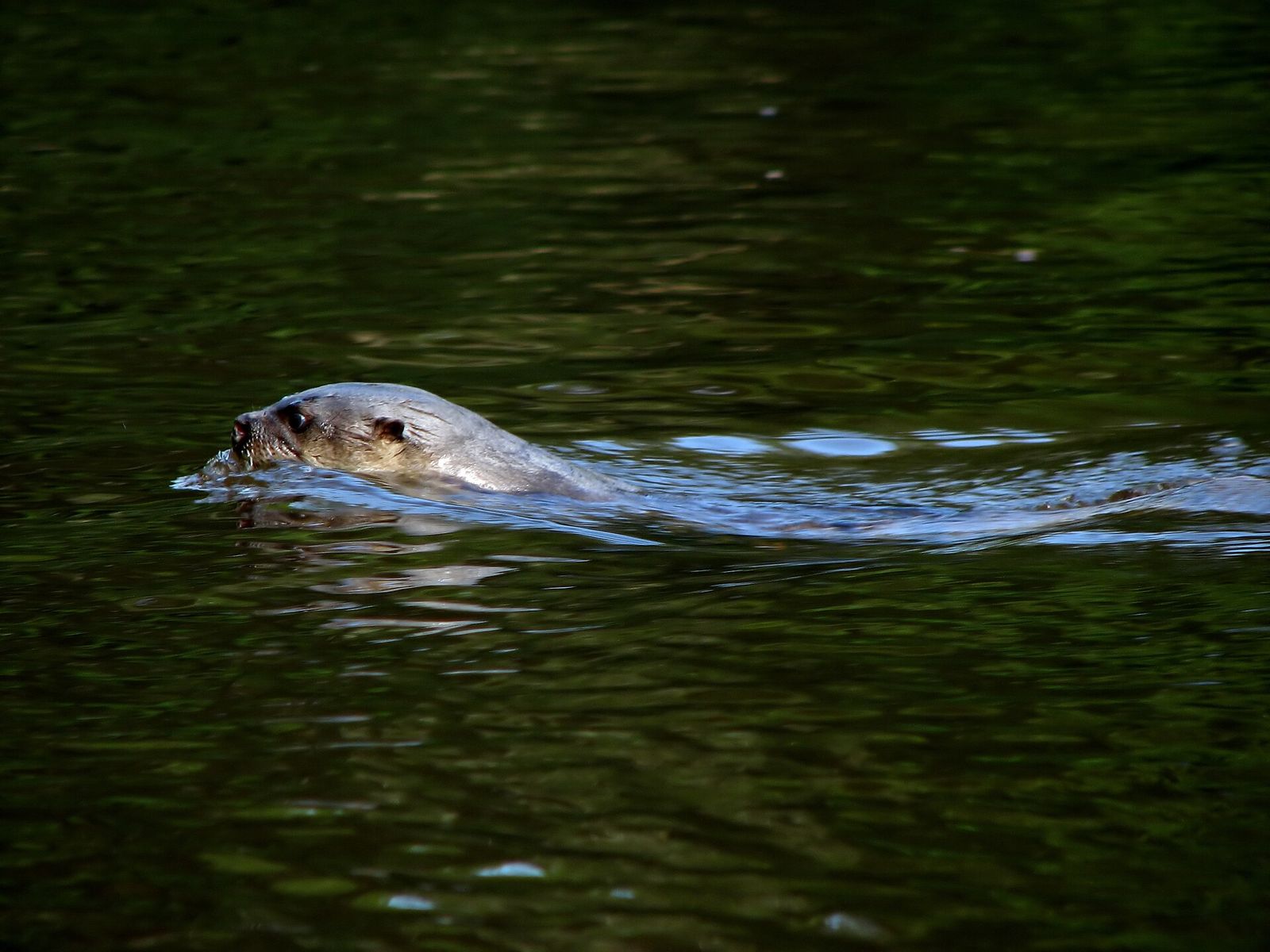
Photo: Encarna Sáez Goñalons & Víctor Martínez Moll (User: Puput ) · CC BY-SA 3.0
Lontra longicaudis
Basic stats
Diet
Mostly fish, about two-thirds of the diet, and crustaceans, about 28%; also molluscs, small mammals, birds, reptiles and insects, with fruit occasionally
Habitat
Clear, fast-flowing rivers and streams in deciduous and evergreen forest, up to about 3,000m; also estuaries, drainage ditches and rice paddies
Range
From north-west Mexico through Central and South America to central Argentina, the widest range of any Lontra species
Litter size
One to five pups, usually two or three; about 3 on average (COMBINE, Soria et al. 2021)
Gestation period
About 57 days (COMBINE, Soria et al. 2021; AnAge)
Size
Head and body 36–66cm; tail 37–84cm
Weight
5–15kg; about 7kg on average (COMBINE, Soria et al. 2021)
The Neotropical river otter is a heavily built otter with a long, wide tail, short stout legs and fully webbed feet. Its short fur is dark grey-brown, lighter around the muzzle and throat, and its broad muzzle has a yellowish-white tip and long whiskers. It is similar to the northern and southern river otters, which live directly north and south of its range (Wikipedia, general species account; Handbook of the Mammals of the World). Males are about 20 to 25% larger than females (Handbook of the Mammals of the World).
Unlike most otters it is fairly solitary: adults usually live alone, and breeding pairs or females with young are seen only occasionally (Wikipedia, general species account). It is mostly diurnal, with activity peaks in the afternoon, although it can become nocturnal where people are active. It rests in riverbank cavities, burrows or dense grass, and it leaves its droppings (spraints) on solid, dry sites close to deep water (Handbook of the Mammals of the World). Breeding is mostly in spring. The young are born blind but furred, open their eyes at about 44 days, begin to enter the water at about 74 days, and are raised by the female alone (Handbook of the Mammals of the World). It sometimes raids fishing nets for prey (Wikipedia, general species account).
Bolivia is among the countries whose Pantanal wetlands the species uses, along with Brazil and Paraguay (Wikipedia, general species account). Where the Pantanal's productivity is high, the Neotropical otter and the giant otter can share the same waters with little or no competition (Wikipedia, general species account).
Quick answers
- What does the Neotropical River Otter eat?
- Mostly fish, about two-thirds of the diet, and crustaceans, about 28%; also molluscs, small mammals, birds, reptiles and insects, with fruit occasionally
- What habitat does the Neotropical River Otter live in?
- Clear, fast-flowing rivers and streams in deciduous and evergreen forest, up to about 3,000m; also estuaries, drainage ditches and rice paddies
- Where is the Neotropical River Otter found?
- From north-west Mexico through Central and South America to central Argentina, the widest range of any Lontra species
- What is the litter size of the Neotropical River Otter?
- One to five pups, usually two or three; about 3 on average (COMBINE, Soria et al. 2021)
- How long is the gestation period of the Neotropical River Otter?
- About 57 days (COMBINE, Soria et al. 2021; AnAge)
- How big is the Neotropical River Otter?
- Head and body 36–66cm; tail 37–84cm
- How much does the Neotropical River Otter weigh?
- 5–15kg; about 7kg on average (COMBINE, Soria et al. 2021)