 Wildlife
of Bolivia
Crab-eating Fox
Bears, Dogs & Otters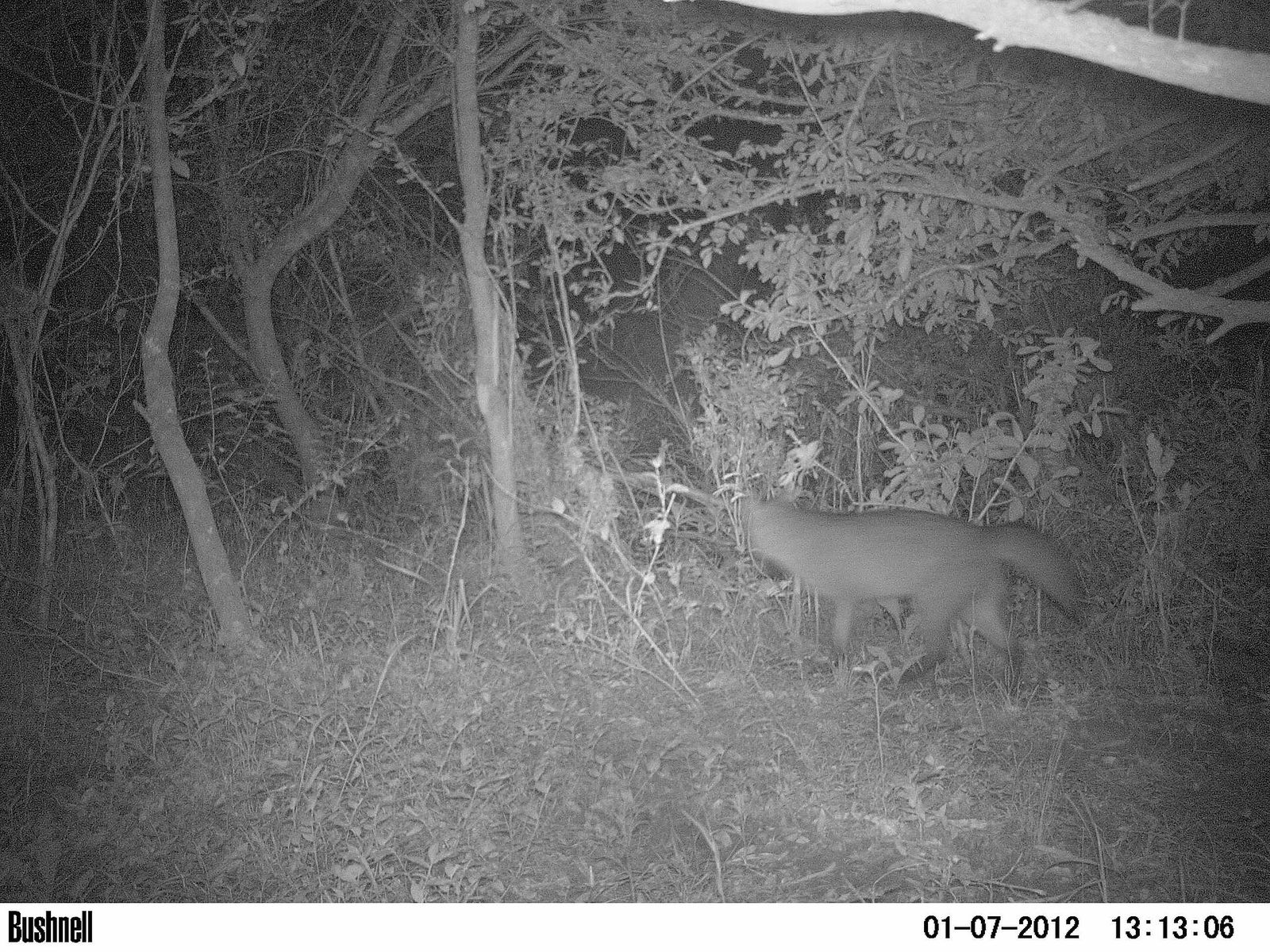
Photo: Julana Julana · CC BY-SA 2.0
Cerdocyon thous
Basic stats
Diet
Omnivorous and opportunistic: crabs on muddy floodplains in the wet season, more insects in the dry season; also rodents, birds, eggs, reptiles, tortoises, fruit and carrion
Habitat
Savannas, woodlands, subtropical forest, thickets and riparian forest; avoids rainforest, high mountains and open grassy savanna; up to about 3,000m
Range
From Colombia and southern Venezuela south to Paraguay, Uruguay and northern Argentina, including the lowlands of Bolivia
Litter size
About 4 (COMBINE, Soria et al. 2021); around 2 to 3 young are seen when they first leave the den
Gestation period
About 56 days, range 52–59 (Handbook of the Mammals of the World; COMBINE, Soria et al. 2021)
Size
Head and body about 64cm on average; tail about 28.5cm
Weight
About 5.7kg on average (COMBINE, Soria et al. 2021)
The crab-eating fox is predominantly greyish-brown, with reddish areas on the face and legs, a black streak along the back and spine, and black-tipped ears and tail. Its ears are wide and round and its tail is long and bushy, held upright when the animal is excited. Its coat varies from grey to brown, yellowish and pale to dark grey between populations (Wikipedia, general species account).
It is nocturnal and crepuscular, with peaks of activity in the middle of the night and in the early morning (Wikipedia, general species account; Handbook of the Mammals of the World). Monogamous pairs hunt as teams, and several pairs may form groups in the breeding season. Separated pairs call to one another with barks, whirring sounds and howls. It often takes over the burrows of other animals, or shelters in bushes and thick grass (Wikipedia, general species account). Sexual maturity comes at nine to ten months. Pups are weaned at about three months and become independent at about five to eight months (Wikipedia, general species account). Farmers regard it as a threat to livestock, which leads to illegal hunting in some countries, and disease from unvaccinated dogs is a main threat (Wikipedia, general species account).
Bolivia lies within the species' range. The Handbook lists the subspecies C. t. entrerianus from Argentina, Bolivia, southern Brazil, Paraguay and Uruguay (Handbook of the Mammals of the World). In the arid Chaco of Bolivia, Paraguay and Argentina, the fox is confined to woodland edges (Handbook of the Mammals of the World).
Quick answers
- What does the Crab-eating Fox eat?
- Omnivorous and opportunistic: crabs on muddy floodplains in the wet season, more insects in the dry season; also rodents, birds, eggs, reptiles, tortoises, fruit and carrion
- What habitat does the Crab-eating Fox live in?
- Savannas, woodlands, subtropical forest, thickets and riparian forest; avoids rainforest, high mountains and open grassy savanna; up to about 3,000m
- Where is the Crab-eating Fox found?
- From Colombia and southern Venezuela south to Paraguay, Uruguay and northern Argentina, including the lowlands of Bolivia
- What is the litter size of the Crab-eating Fox?
- About 4 (COMBINE, Soria et al. 2021); around 2 to 3 young are seen when they first leave the den
- How long is the gestation period of the Crab-eating Fox?
- About 56 days, range 52–59 (Handbook of the Mammals of the World; COMBINE, Soria et al. 2021)
- How big is the Crab-eating Fox?
- Head and body about 64cm on average; tail about 28.5cm
- How much does the Crab-eating Fox weigh?
- About 5.7kg on average (COMBINE, Soria et al. 2021)