 Wildlife
of Bolivia
Ceratophrys cornuta
Other Amphibians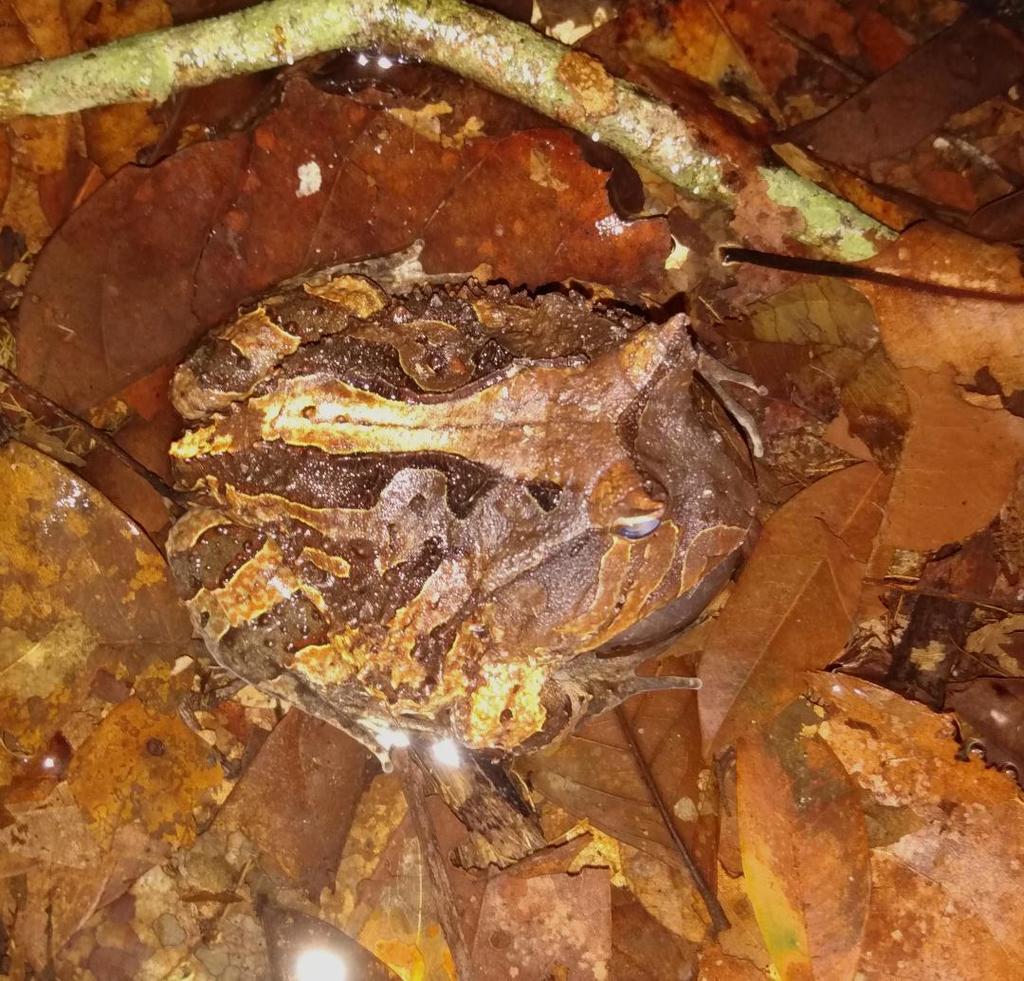
Photo: (c) Sidnei Dantas, some rights reserved (CC BY-SA) · CC-BY-SA
Ceratophrys cornuta
Basic stats
Diet
Other frogs, fish, lizards and mice
Habitat
Lowland rainforest; breeds in rain-filled ponds in terra firme forest
Range
Northern South America (Amazon basin)
Clutch size
Clutches from Peru 1,640–2,270 eggs
Size
About 12cm (AmphiBIO); Wikipedia gives up to 20cm
The Amazonian or Surinam horned frog is a bulky, almost round frog with an exceptionally wide mouth and a pointed, horn-like flap of skin over each eye. Adults have dark bars along the back and between the eyes, and these markings and the eyelid 'horns' already start to form in late-stage tadpoles. It was once treated as the same species as the ornate horned frog, but the two live in different habitats and do not interbreed in the wild (Wikipedia, general species account; AmphiBIO, Oliveira et al. 2017).
It swallows other frogs, including other horned frogs, as well as fish, lizards and mice. Eggs are laid in ponds filled by rain in terra firme forest, and the tadpoles are aggressive from soon after hatching, attacking each other and the tadpoles of other species (Wikipedia, general species account; Tadpoles of Central Amazonia, Plazi treatment).
The sources opened for this account describe its range as northern South America and do not mention Bolivia; it is listed on this guide from GBIF records in the Bolivian Amazon. The horned frog of the Bolivian Chaco is a different species, Cranwell's horned frog (Ceratophrys cranwelli).
Quick answers
- What does the Ceratophrys cornuta eat?
- Other frogs, fish, lizards and mice
- What habitat does the Ceratophrys cornuta live in?
- Lowland rainforest; breeds in rain-filled ponds in terra firme forest
- Where is the Ceratophrys cornuta found?
- Northern South America (Amazon basin)
- How many eggs does the Ceratophrys cornuta lay?
- Clutches from Peru 1,640–2,270 eggs
- How big is the Ceratophrys cornuta?
- About 12cm (AmphiBIO); Wikipedia gives up to 20cm