 Wildlife
of Bolivia
Bush Dog
Bears, Dogs & Otters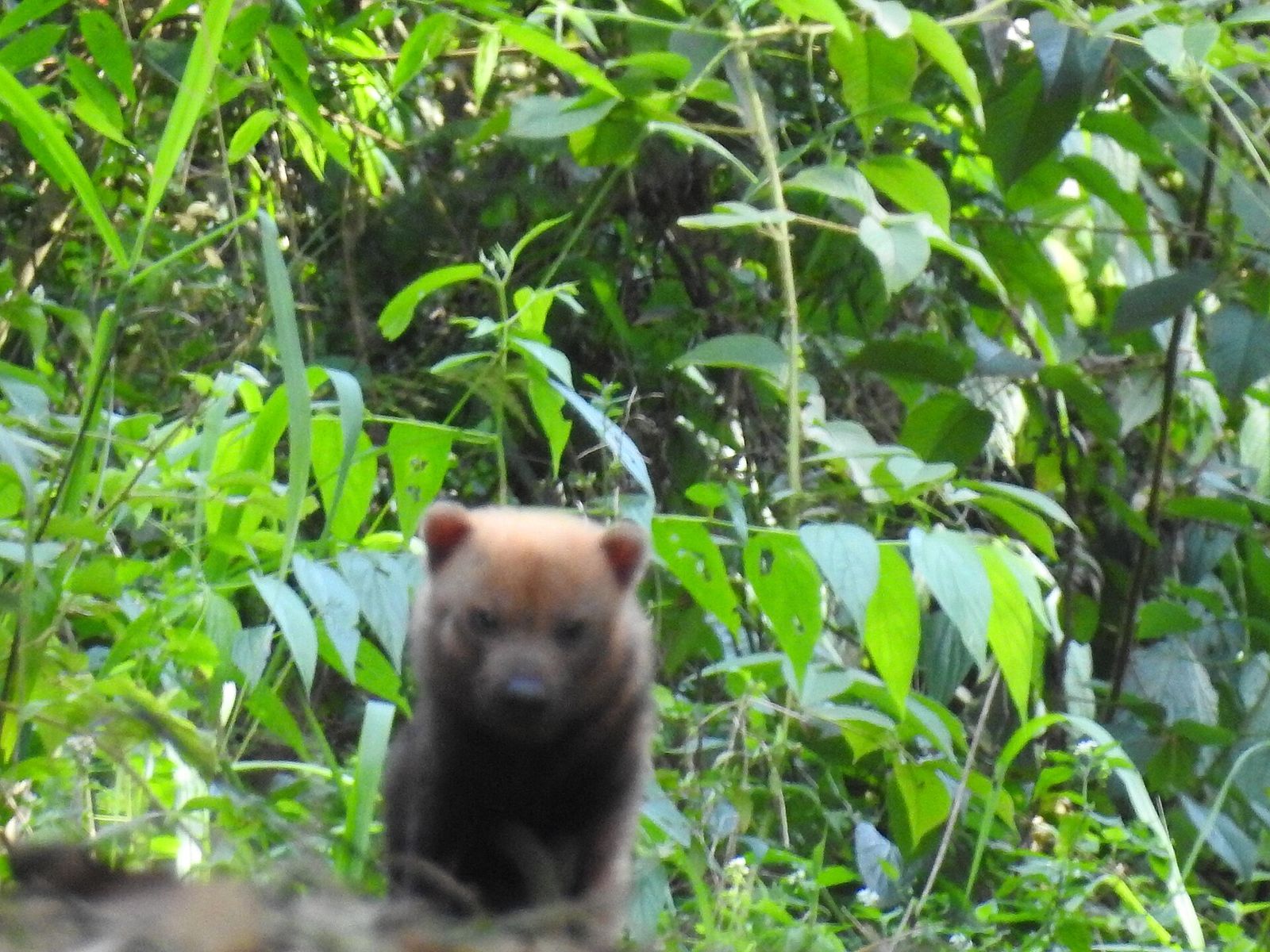
Photo: Anderson cristiano hendgen · CC BY-SA 4.0
Speothos venaticus
Basic stats
Diet
Mainly large rodents such as pacas and agoutis, with other small mammals, teju lizards, snakes and ground-nesting birds; packs can also bring down capybaras, deer and even tapirs
Habitat
Forest dweller usually near water, especially small streams, in lowland forest below 1,500m; also wet savanna, cerrado and pampas edges
Range
From Costa Rica through much of South America east of the Andes, as far south as central Bolivia, Paraguay and southern Brazil
Litter size
About 4 (COMBINE, Soria et al. 2021; AnAge)
Gestation period
About 68 days (AnAge); 67 days in captivity
Size
Head and body 57–75cm; tail 12.5–15cm; 20–30cm at the shoulder
Weight
5–8kg
The bush dog is a long-bodied canid with short legs, a short muzzle, a broad face and small rounded ears. Adults have soft, long, brownish-tan fur, redder on the head, neck and back, with a darker underside that sometimes has a pale throat patch. Young animals are black all over (Wikipedia, general species account). Coat colour varies widely between individuals, from almost black to very pale blond (Handbook of the Mammals of the World). Its feet are partly webbed and its tracks are almost identical to those of a domestic dog (Handbook of the Mammals of the World).
The bush dog is the most gregarious South American canid. A pack is usually a mated pair with their relatives, typically 2 to 6 animals and up to 12, and only the adult pair breeds while the others help rear and guard the pups (Handbook of the Mammals of the World; Wikipedia, general species account). It hunts by day and pursues pacas into the water, and packs can bring down prey much larger than themselves by working together. Packmates keep in contact with frequent whines, and the packs use hollow logs and armadillo burrows for shelter. Home ranges are about 3.8 to 10 km2 (Wikipedia, general species account).
Bolivia lies within the bush dog's range. The Handbook lists forested areas of Bolivia within its range, and the subspecies S. v. venaticus reaches Bolivia (Handbook of the Mammals of the World). In Bolivia the dogs hunt Mazama deer by attacking its legs until it tires and falls (Handbook of the Mammals of the World). Hunting bush dogs is illegal in most of their range, including Bolivia (Wikipedia, general species account). On this guide it is a target species of Chiquitania & Jesuit Missions.
Quick answers
- What does the Bush Dog eat?
- Mainly large rodents such as pacas and agoutis, with other small mammals, teju lizards, snakes and ground-nesting birds; packs can also bring down capybaras, deer and even tapirs
- What habitat does the Bush Dog live in?
- Forest dweller usually near water, especially small streams, in lowland forest below 1,500m; also wet savanna, cerrado and pampas edges
- Where is the Bush Dog found?
- From Costa Rica through much of South America east of the Andes, as far south as central Bolivia, Paraguay and southern Brazil
- What is the litter size of the Bush Dog?
- About 4 (COMBINE, Soria et al. 2021; AnAge)
- How long is the gestation period of the Bush Dog?
- About 68 days (AnAge); 67 days in captivity
- How big is the Bush Dog?
- Head and body 57–75cm; tail 12.5–15cm; 20–30cm at the shoulder
- How much does the Bush Dog weigh?
- 5–8kg