 Wildlife
of Bolivia
Bothrops atrox
Vipers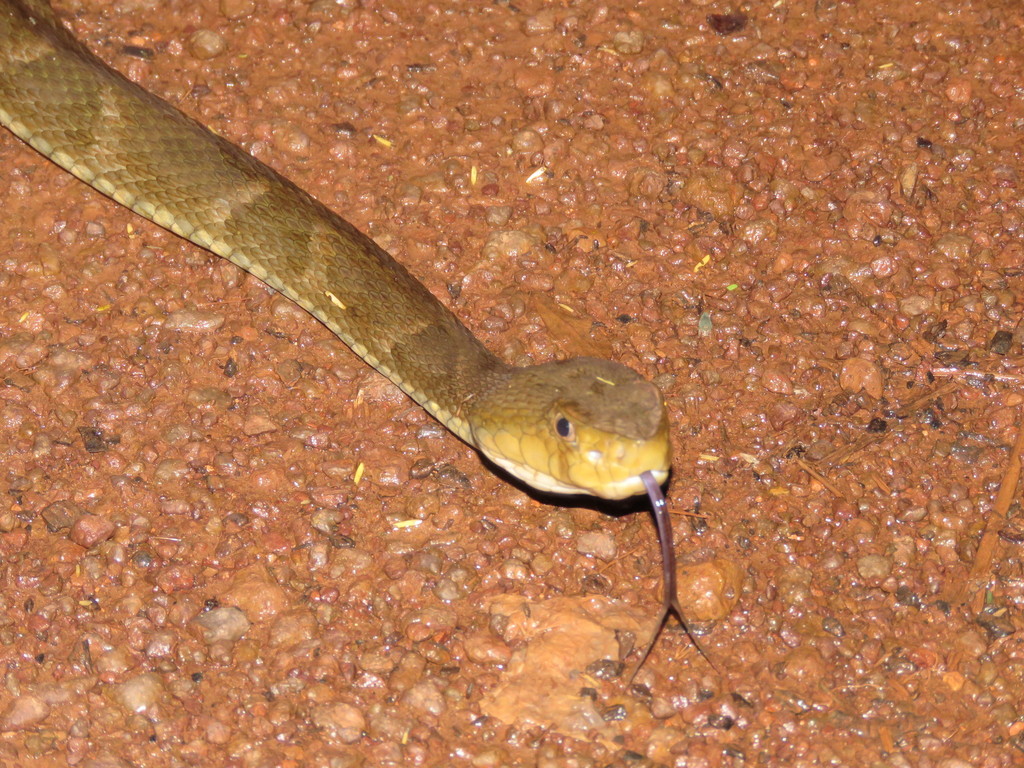
Photo: (c) Vincent A. Vos, some rights reserved (CC BY) · CC-BY
Bothrops atrox
Basic stats
Habitat
Lowland forest and wetlands, from about 50m to 1590m; terrestrial, but climbs trees when necessary
Range
Tropical lowlands east of the Andes, from south-east Colombia, Venezuela and the Guianas through eastern Ecuador, eastern Peru and northern Bolivia to the northern half of Brazil, and Trinidad
Size
Adults usually 75–125cm; largest measured 162cm
Weight
Maximum about 1.8kg
Bothrops atrox is a highly venomous, heavy-bodied pit viper, usually 75–125cm long, with 23–29 rows of dorsal scales at midbody. Its ground colour may be olive, brown, tan, grey, yellow or, rarely, rusty. The body pattern is a series of dorsolateral blotches, rectangular or trapezoidal, that may oppose or alternate across the back and often fuse into bands, with pale borders. The head usually has no markings beyond a fairly wide postocular stripe running from behind the eye to the angle of the mouth. The iris is gold or bronze, the tongue is black, and the belly is white, cream or yellowish grey with increasing grey to black mottling towards the tail. The Spanish name jergón refers to the X-like markings of the pattern (Wikipedia, general species account).
It is generally terrestrial, but it is also an excellent swimmer and will climb trees when necessary (Wikipedia, general species account). It is active mainly at night and gives birth to live young (ReptTraits, Oskyrko et al. 2024). It lives in lowland forest and wetlands, in primary forest as well as disturbed areas (Nogueira 2019). Despite the destruction of rainforests, it remains among the most numerous and common pit vipers (Wikipedia, general species account). In Bolivia it is called yoperojobobo, and northern Bolivia lies within its range (Wikipedia; Nogueira 2019). Its maximum recorded body mass is about 1.8kg (ReptTraits, Oskyrko et al. 2024).
Quick answers
- What habitat does the Bothrops atrox live in?
- Lowland forest and wetlands, from about 50m to 1590m; terrestrial, but climbs trees when necessary
- Where is the Bothrops atrox found?
- Tropical lowlands east of the Andes, from south-east Colombia, Venezuela and the Guianas through eastern Ecuador, eastern Peru and northern Bolivia to the northern half of Brazil, and Trinidad
- How big is the Bothrops atrox?
- Adults usually 75–125cm; largest measured 162cm
- How much does the Bothrops atrox weigh?
- Maximum about 1.8kg