 Wildlife
of Bolivia
Andean Bear
Bears, Dogs & Otters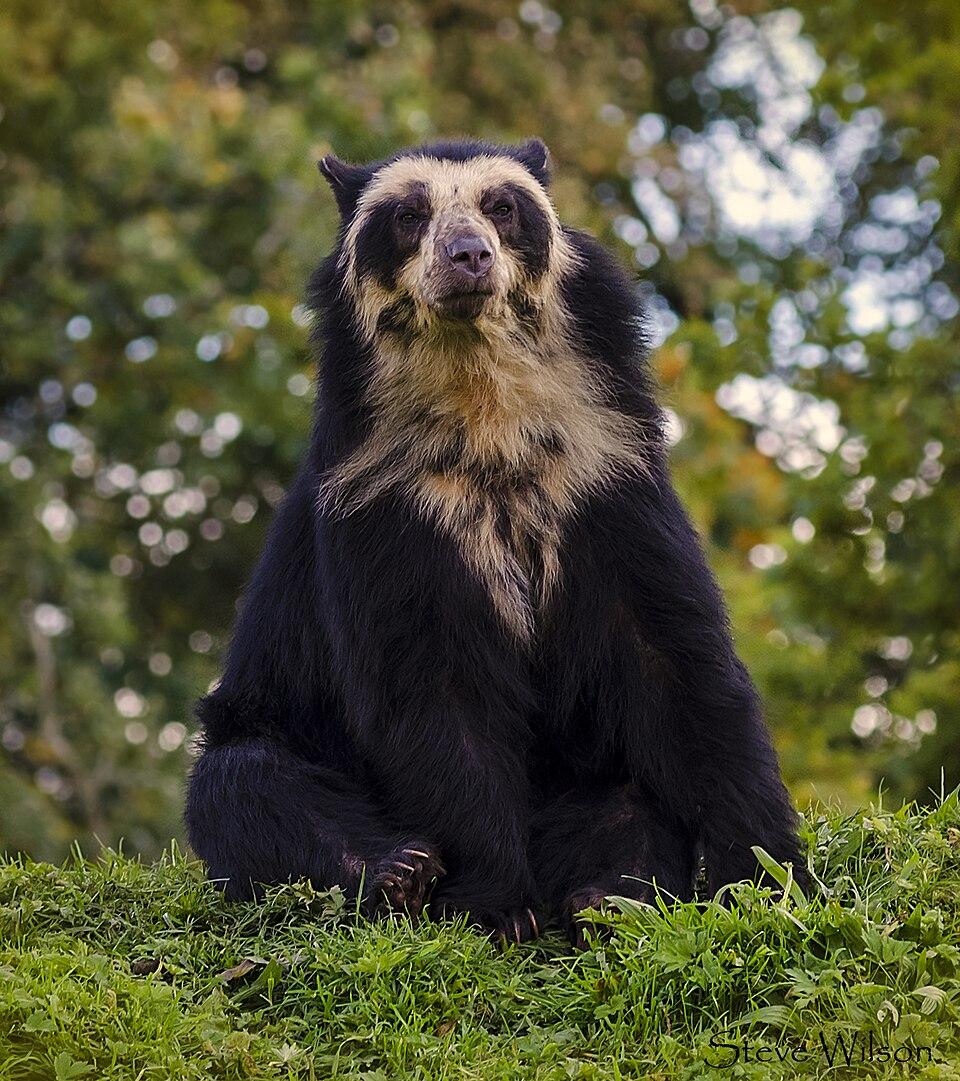
Photo: Steve Wilson · CC BY 2.0
Tremarctos ornatus
Basic stats
Diet
Mostly plant food: bromeliads (the hearts of Puya in grassland, and Tillandsia in trees) make up 15–90% of the diet depending on season and area, with fruit forming much of the rest; meat is also eaten
Habitat
Humid and very humid montane cloud forest, elfin forest, puna and páramo grassland, and thorn forest and scrub in western Peru; from about 200m to over 4,700m
Range
Andes of Venezuela, Colombia, Ecuador, Peru and western Bolivia, possibly Panama, with controversial evidence from northern Argentina
Litter size
Usually one or two cubs in the wild, sometimes three or four; captive litters most often two
Gestation period
About 226 days, with a variable period of delayed implantation (COMBINE, Soria et al. 2021; Handbook of the Mammals of the World)
Size
Head and body 130–190cm; tail under 10cm
Weight
Males 100–175kg (rarely up to 200kg); females 60–80kg
The Andean bear, also called the spectacled bear, is the only living bear native to South America and the last surviving short-faced bear (Wikipedia, general species account). Its coat is black or dark brown, with a cream or white bib-like marking on the chin, neck or chest and paler markings around the muzzle and eyes. The white eye rings give the species its common name, but many individuals lack complete rings and some have almost no facial markings (Handbook of the Mammals of the World). Its claws are short on both front and rear feet, and its muzzle is short compared with other bears (Handbook of the Mammals of the World; Wikipedia, general species account).
Across its range it is mostly diurnal, although some areas show more night activity, and it does not hibernate because food is available all year (Handbook of the Mammals of the World). It climbs trees to feed on Tillandsia, and in high grassland it strips the stiff leaves from Puya plants to reach the vegetative heart. Males have larger ranges than females, home ranges vary from as small as 10km2 to as large as 150km2, and bears gather at rich feeding places such as cornfields and cactus groves (Handbook of the Mammals of the World). Presumed mating has been seen from March to October. Females can first produce cubs at about four to seven years, then at two-year intervals (Handbook of the Mammals of the World).
Bolivia lies within the species' range, which the Handbook gives as western Bolivia (Handbook of the Mammals of the World; Wikipedia, general species account). At one high-elevation Bolivian site of mixed grassland and cloud forest, the bears were entirely diurnal, sleeping 9 to 12 hours at night (Handbook of the Mammals of the World). On this guide it is a target species of Madidi National Park, Cotapata, Zongo & the Yungas Road, Amboro National Park, Samaipata & Comarapa Cloud Forests, and Sucre, Toro Toro & the Macaw Valleys.
Quick answers
- What does the Andean Bear eat?
- Mostly plant food: bromeliads (the hearts of Puya in grassland, and Tillandsia in trees) make up 15–90% of the diet depending on season and area, with fruit forming much of the rest; meat is also eaten
- What habitat does the Andean Bear live in?
- Humid and very humid montane cloud forest, elfin forest, puna and páramo grassland, and thorn forest and scrub in western Peru; from about 200m to over 4,700m
- Where is the Andean Bear found?
- Andes of Venezuela, Colombia, Ecuador, Peru and western Bolivia, possibly Panama, with controversial evidence from northern Argentina
- What is the litter size of the Andean Bear?
- Usually one or two cubs in the wild, sometimes three or four; captive litters most often two
- How long is the gestation period of the Andean Bear?
- About 226 days, with a variable period of delayed implantation (COMBINE, Soria et al. 2021; Handbook of the Mammals of the World)
- How big is the Andean Bear?
- Head and body 130–190cm; tail under 10cm
- How much does the Andean Bear weigh?
- Males 100–175kg (rarely up to 200kg); females 60–80kg